Seunghun Oh
Ph.D. Student in Civil & Environmental Engineering at UCLA

Los Angeles, CA, USA
seunghun at g.ucla.edu
I am a first-year Ph.D. student in Civil & Environmental Engineering at UCLA, advised by Prof. Chen Tang in the Trustworthy Autonomous Mobility Systems (TAMS) Lab.
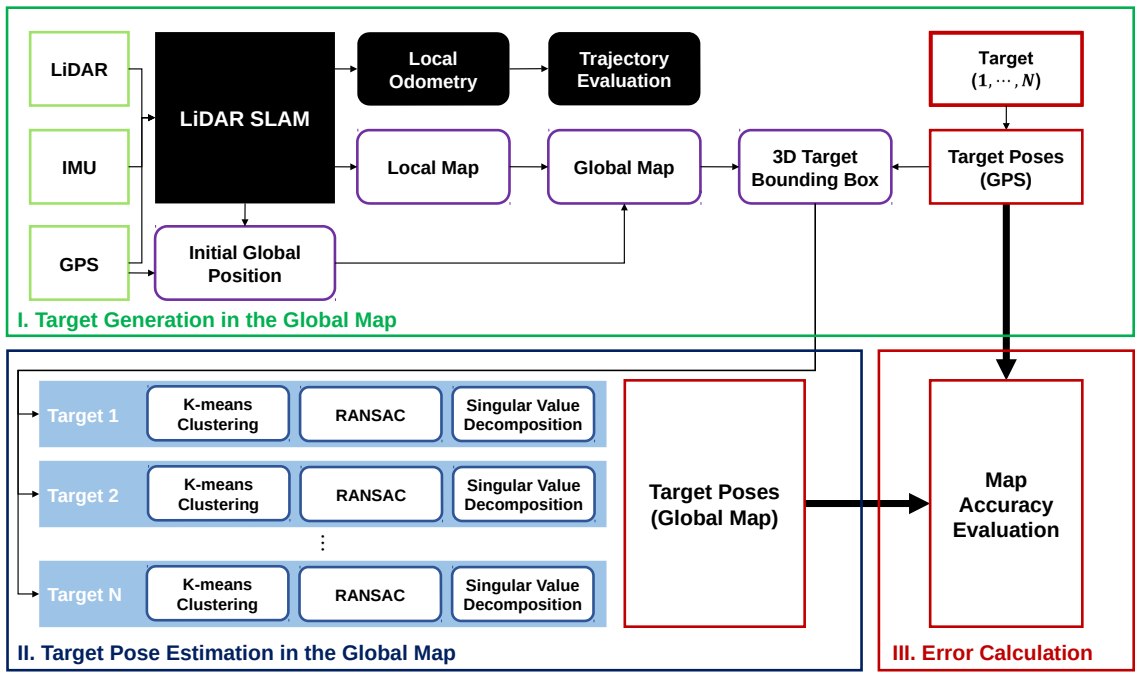
Previously, I studied Mechanical Engineering and Computer Science at Seoul National University, where I had the opportunity to work with Prof. Ayoung Kim and Prof. Jaesik Park. My research experience has spanned robot perception, localization and mapping (SLAM), 3D reconstruction, and multi-sensor integration.
My long-term goal is to develop trustworthy physical AI that can perceive, reason, and act safely and reliably in complex real-world environments. I am particularly interested in enabling autonomous systems to learn and adapt their behavior while maintaining robustness and safety.
Selected Publications
-
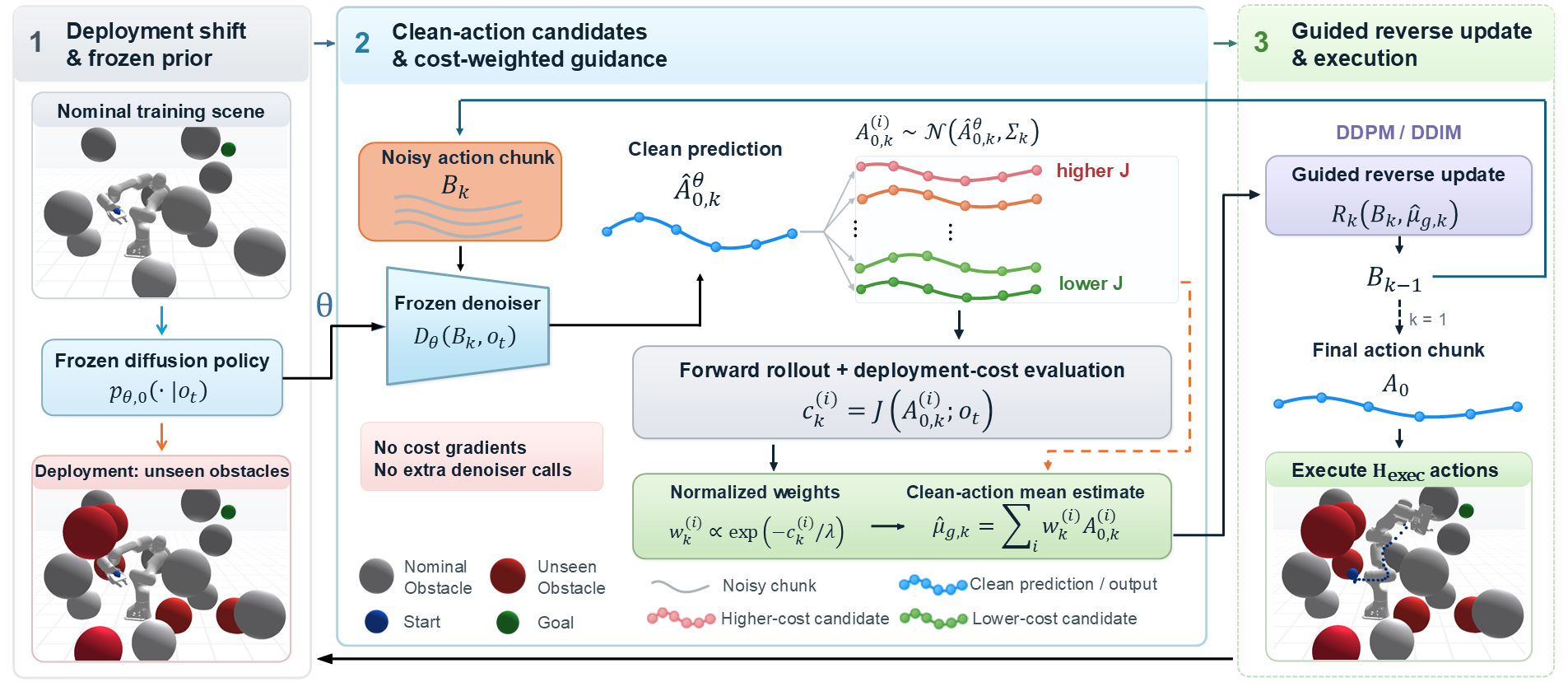 CleanGuide: Clean-Action-Aligned Guidance for Deployment-Time Adaptation of Diffusion PoliciesIEEE International Conference on Robotics and Automation (ICRA), 2027Under Review